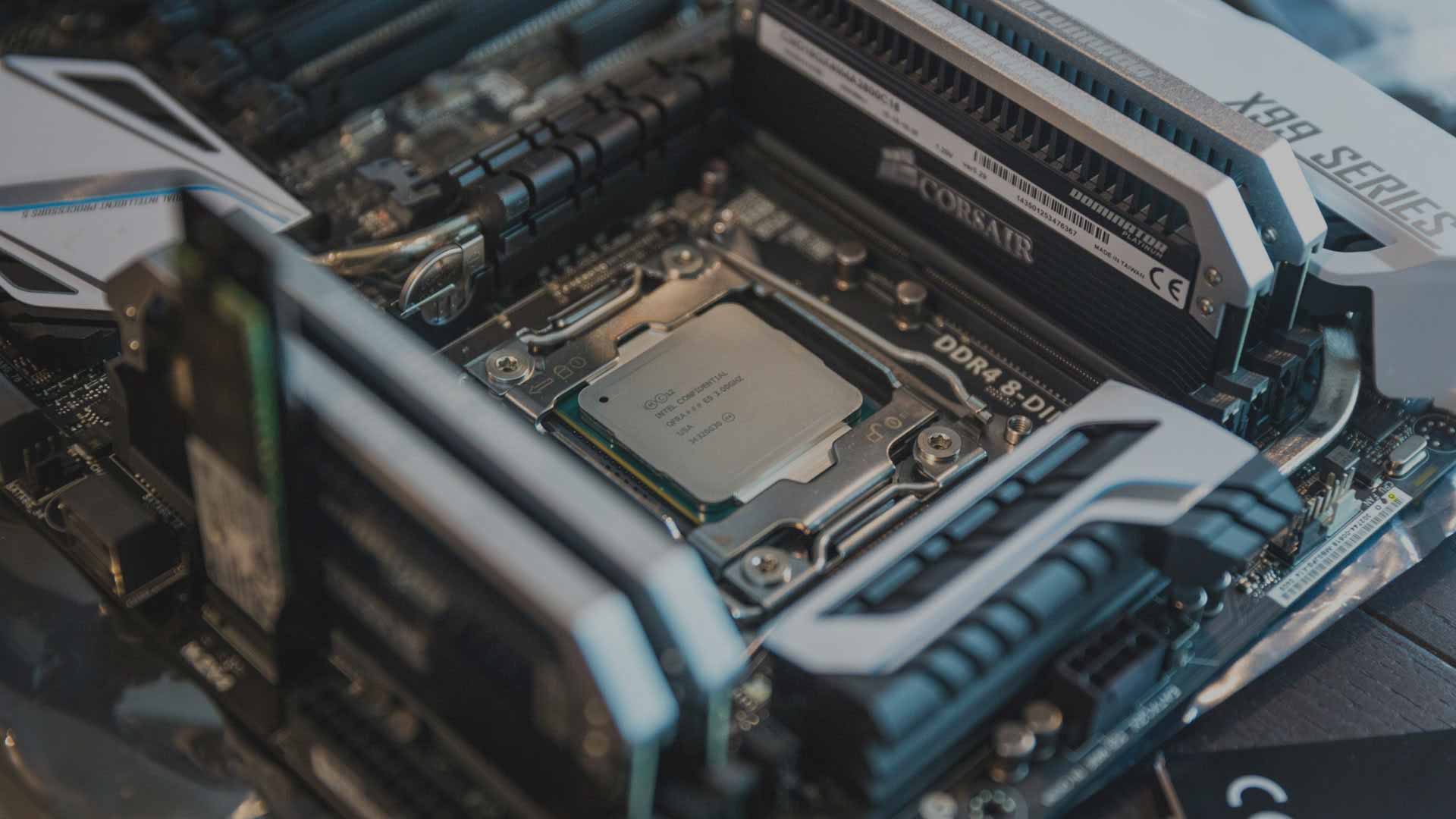
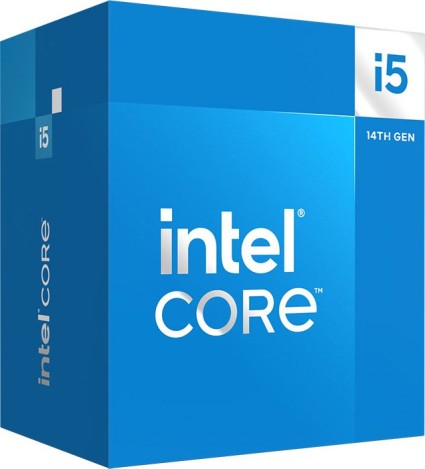
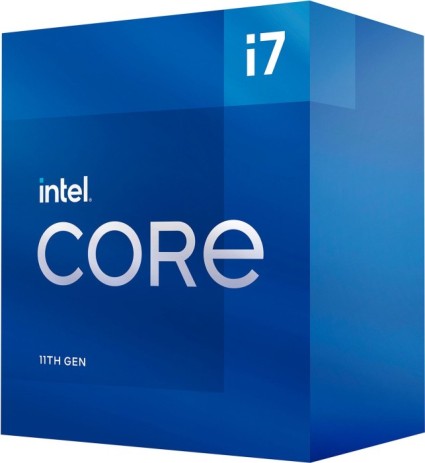
Intel Core i5-14400 vs. Intel Core i7-11700
In diesem Vergleich von Intel Core i5-14400 versus Intel Core i7-11700 vergleichen wir die technischen Daten der beiden CPUs. Welcher Prozessor ist schneller? Hier gibt es FPS & Benchmarks in Gaming und Anwendungen.
Hinweis: Unsere Links sind Affiliate Links. Wir erhalten beim Kauf eine kleine Provision, ohne dass sich euer Preis erhöht.
 Die Produktdaten, Händler- und Angebotsdaten werden freundlicherweise von Geizhals.de bereitgestellt.
Allgemeine Informationen
| Günstigster Preis |
 279,89€ 279,89€
|
|
| Serie | Intel Core i-14000 | Intel Core i-11000 |
| Chip-Architektur | Golden Cove oder Raptor Cove (P-Core) + Gracemont (E-Core) | Cypress Cove |
| Codename | Raptor Lake-S | Rocket Lake-S |
| Produktname | Intel Core i5-14400 | Intel Core i7-11700 |
Spezifikationen
Die Anzahl der Rechenkerne, die maximale Taktrate und die Größe des Cache können sich auf die Leistung in Spielen und Anwendungen auswirken. Mit 10 Kernen bietet der Intel Core i5-14400 deutlich mehr Kerne als der Intel Core i7-11700 mit 8 Rechenkernen. Der maximale Takt liegt beim Intel Core i5-14400 mit 4.70 GHz etwas niedriger als beim Intel Core i7-11700 mit 4.90 GHz.
| Kerne (Gesamt) | 10 | 8 |
| Threads | 16 (12+4) | 16 |
| Anzahl P-Cores | 6C | 8C |
| Anzahl E-Cores | 4c | - |
| Basis-Takt | 2.50 GHz | 2.50 GHz |
| Takt P-Cores | 2.50 GHz | 2.50 GHz |
| Takt E-Cores | 1.80 GHz | - |
| Turbo-Takt | 4.70 GHz | 4.90 (Turbo Boost Max 3.0) GHz |
| Turbo P-Cores | 4.70 GHz | 4.90 (Turbo Boost Max 3.0) GHz |
| Turbo E-Cores | 3.50 GHz | - |
| Gesamter L2-Cache | 9.5MiB MB | 4 MB |
| Gesamter L3-Cache | 20MiB MB | 16 MB |
| Fertigung | Intel 7 (10 nm) | Intel 14 nm+++ |
| Rechenleistung | - | - |
| Leistungsaufnahme (TDP) | 65W (Processor Base Power) 148W (Maximum Turbo Power) |
65W |
Mainboard-Kompatibilität
Während der Intel Core i5-14400 den Intel 1700 Sockel nutzt, ist der Intel Core i7-11700 mit Mainboards für den Sockel Intel 1200 kompatibel. Die genaue Chipsatz-Eignung und die unterstützten PCIe-Lanes können Sie der Tabelle entnehmen.
| Sockel | Intel 1700 | Intel 1200 |
| Chipsatz-Eignung | B660, B760, H610, H610E, H670, H770, Q670, Q670E, R680E, Z690, Z790, W680 | B560, H470, H510, H570, Q470, W480, W580, Z490, Z590 |
| PCIe-3.0-Lanes | - | - |
| PCIe-4.0-Lanes | 4x | 20x |
| PCIe-5.0-Lanes | 16x | - |
RAM-Kompatibilität
Während Sie beim Intel Core i5-14400 bis zu 192 GB vom Typ DDR4/DDR5 im Dual Channel verbauen können, unterstützt der Intel Core i7-11700 bis zu 128 GB DDR4 Arbeitsspeicher.
| Speicher-Controller | DDR4/DDR5 | DDR4 |
| Anzahl Speicherkanäle | Dual Channel | Dual Channel |
| max. Speichermenge | 192 GB | 128 GB |
| ECC-Unterstützung | - | - |
Grafik
| iGPU | ✓ | ✓ |
| iGPU-Modell | Intel UHD Graphics 730 | Intel UHD Graphics 750 |
| iGPU-Takt | 1,55GHz | 0,35-1,30GHz |
| iGPU-Einheiten | 1.5Xe/24EU/192SP | 2Xe/32EU/256SP |
| iGPU-Rechenleistung | 0.61 TFLOPS (FP32) | 0.67 TFLOPS (FP32) |
| iGPU-Architektur | Xe-LP / Gen 12.2 | Xe-LP / Gen 12.1, Codename "Rocket Lake GT1" |
| iGPU-Interface | DP 1.4a (7680x4320@60Hz), eDP 1.4b (5120x3200@120Hz), HDMI 2.1 (4096x2160@60Hz) | DP 1.4a (5120x3200@60Hz), eDP 1.4a (5120x3200@60Hz), HDMI 2.0b (4096x2160@60Hz) |
| iGPU-Funktionen | 4x Display Support, 1x Codec Engine / Video Decode Box, Intel Clear Video HD, Intel Quick Sync Video, AV1 decode, H.265 encode/decode, VP9 encode/decode, HDCP 2.3, DirectX 12, OpenGL 4.5, OpenCL 3.0, Vulkan 1.0 | 3x Display Support, Intel Clear Video HD, Intel InTru 3D, Intel Quick Sync Video, AV1 decode, H.265 encode/decode, VP9 encode/decode, HDCP 2.3, DirectX 12.1, OpenGL 4.5, OpenCL 3.0, Vulkan 1.0, max. 64GB iGPU-Speicher |
Sonstiges
| Freier Multiplikator | - | - |
| Stepping | B0/C0, Spec Code: SRN46/SRN3Q | B0, Spec Code: SRKNS |
| Heatspreader-Kontaktmittel | - | Metall/verlötet |
| Temparatur max. | 100°C (Tjunction) | 100°C (Tjunction) |
| Fernwartung | - | ✓ (Intel vPro) |
| Einführung | 2024/Q1 (8.1.2024) | 2021/Q1 (30.3.2021) |
| Herstellergarantie | 5 Jahre bei Intel® Boxed-Prozessoren durch erweiterte Garantieunterstützung (Info EN) | 3 Jahre bei Intel® Boxed-Prozessoren (Info DE/Info EN) |
CPU-Funktionen
| AES-NI | ✓ | ✓ |
| AVX | ✓ | ✓ |
| AVX2 | ✓ | ✓ |
| Boot Guard | ✓ | ✓ |
| CET | ✓ | - |
| DL Boost | ✓ | ✓ |
| EIST | ✓ | ✓ |
| GNA 3.0 | ✓ | - |
| Idle States | ✓ | ✓ |
| Instruction Set | ✓ | ✓ |
| ISM | ✓ | - |
| MBEC | ✓ | - |
| Optane Memory Support | - | ✓ |
| OS Guard | ✓ | ✓ |
| Secure Key | ✓ | ✓ |
| Speed Shift | ✓ | - |
| SSE4.1 | ✓ | ✓ |
| SSE4.2 | ✓ | ✓ |
| Thermal Monitoring | ✓ | ✓ |
| VMD | ✓ | - |
| VT-d | ✓ | ✓ |
| VT-x | ✓ | ✓ |
| VT-x EPT | ✓ | ✓ |
| XD Bit | ✓ | ✓ |