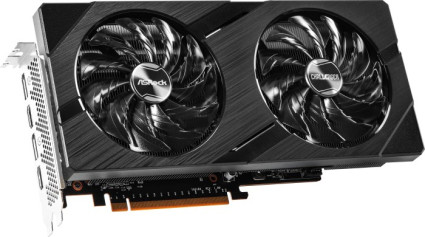
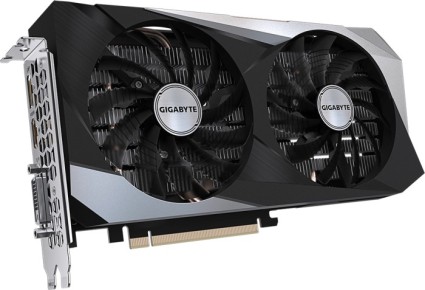
ASRock Arc A750 Challenger D 8GB OC vs. GIGABYTE RTX 3050 Windforce OC 8G
In diesem Vergleich von ASRock Arc A750 Challenger D 8GB OC versus GIGABYTE RTX 3050 Windforce OC 8G vergleichen wir die technischen Daten der beiden GPUs. Welche Grafikkarte ist schneller? Hier gibt es FPS & Benchmarks in Gaming und Anwendungen. Außerdem Daten zu Verbrauch, Effizienz (FPS pro Watt) und Preis-Leistung (FPS pro Euro).
Hinweis: Unsere Links sind Affiliate Links. Wir erhalten beim Kauf eine kleine Provision, ohne dass sich euer Preis erhöht.
 Die Produktdaten, Händler- und Angebotsdaten werden freundlicherweise von Geizhals.de bereitgestellt.
Allgemeine Informationen
| Günstigster Preis | ||
| Hersteller | ASRock | GIGABYTE |
| Serie | Intel Arc A750 Graphics - 8GB | NVIDIA GeForce RTX 3050 - 8GB |
| Chip-Architektur | Xe-HPG "Alchemist" (ab 2022/Q1) | Ampere (ab 2020/Q3) |
| Chip-Bezeichnung | ACM-G10 / DG2-512 | GA106-150-KA-A1 |
| Fertigung | TSMC 6 nm | Samsung 8 nm |
| Chip-Größe | 406 mm² | 276 mm² |
| Kühlung | 2x Axial-Lüfter (100mm) mit 0dB-Zero-Fan-Modus | 2x Axial-Lüfter (100mm) mit 0dB-Zero-Fan-Modus |

Spezifikationen
Die Anzahl der Recheneinheiten, die Taktraten sowie die Größe des Cache sind neben der zugrunde liegenden Architektur ein Indiz für die Leistungsfähigkeit eines Produkts. Die ASRock Arc A750 Challenger D 8GB OC verfügt über 3584 FP32-ALUs und hat damit deutlich mehr Recheneinheiten als die GIGABYTE RTX 3050 Windforce OC 8G mit 2560 FP32-ALUs. Der Boost-Takt der ASRock Arc A750 Challenger D 8GB OC liegt mit 2200 MHz mehr als/wie bei der GIGABYTE RTX 3050 Windforce OC 8G mit 1792 MHz.
| Basis-Takt | unbekannt GHz | 1552 GHz |
| Boost-Takt | 2200 GHz | 1792 GHz |
| Übertaktung | +150MHz Boost | +15MHz Boost |
| Chip-Konfiguration | 28Xe / 448EU (3584SP / 224TMU / 112ROP) | 20SM (2560SP / 80TMU / 32ROP) |
| Rechenleistung | 31.54 TFLOPS (FP16), 15.77 TFLOPS (FP32), N/A (FP64) | 9.18 TFLOPS (FP16), 9.18 TFLOPS (FP32), 0.14 TFLOPS (FP64) |
Kompatibilität und Abmessungen
| Schnittstelle | PCIe 4.0 x16 | PCIe 4.0 x16 (x8) |
| Abmessung | 271 | 243,6 |
| Gesamthöhe | Dual Slot (2.4 Slots) | Dual Slot |
| Bauform | PCIe-Karte (full height) | PCIe-Karte (full height) |
| Slotblende | full height | full height |
| Leistungsaufnahme (TDP) | 225W (Intel) | 130W |
| Zusätzliche Stromanschlüsse | 2x 8-Pin PCIe | 1x 8-Pin PCIe |
Speicher
Die ASRock Arc A750 Challenger D 8GB OC verfügt über 8 GB GDDR6 Videospeicher, welcher an ein 256 Bit Speicherinterface angebunden ist und mit 16 Gbps taktet. Die Speicherbandbreite liegt damit bei 512 GB/s. Bei der GIGABYTE RTX 3050 Windforce OC 8G sind dagegen 8 GB GDDR6 VRAM mit einer Taktrate von 14 Gbps an einem 128 Bit Speicherinterface angeschlossen. Daraus resultiert eine Speicherbandbreite von 224 GB/s.
| Speicherkapazität | 8 GB | 8 GB |
| Speichertyp | GDDR6 | GDDR6 |
| Speicherinterface | 256 Bit | 128 Bit |
| Speichertakt | 16 Gbps (2000 MHz) | 14 Gbps (1750 MHz) |
| Speicherbandbreite | 512 GB/s | 224 GB/s |
Videoanschlüsse
| HDMI | 1x HDMI 2.0b | 1x HDMI 2.1 |
| DisplayPort | 2x DisplayPort 2.0 UHBR10 | 1x DisplayPort 1.4a |
Transcoding-Engine
| NVENC | - | 1x (7th Gen, max. Sessions: 5) |
| NVDEC | - | 1x (5th Gen) |
Encoding
| H.265 | ✓ (4K YUV 4:2:0 / 4K YUV 4:4:4 / HEVC 10bit support) | ✓ (4K YUV 4:2:0 / 4K YUV 4:4:4 / 4K Lossless / 8K / HEVC 10bit support / HEVC B Frame support) |
| H.264 | ✓ (YUV 4:2:0 / YUV 4:4:4) | ✓ (YUV 4:2:0 / YUV 4:4:4 / Lossless) |
Decoding
| AV1 | ✓ (8bit / 10bit) | ✓ (8bit / 10bit) |
| H.265 | ✓ (8bit 4:2:0 / 10bit 4:2:0 / 12bit 4:2:0 / 8bit 4:4:4 / 10bit 4:4:4 / 12bit 4:4:4) | ✓ (8bit 4:2:0 / 10bit 4:2:0 / 12bit 4:2:0 / 8bit 4:4:4 / 10bit 4:4:4 / 12bit 4:4:4) |
| H.264 | ✓ | ✓ |
| VP9 | ✓ (8bit / 10bit / 12bit) | ✓ (8bit / 10bit / 12bit) |
| VP8 | ✓ | ✓ |
| VP8 | ✓ | ✓ |
| VP8 | - | ✓ |
| VP8 | ✓ | ✓ |
API-Unterstützung
| DirectX | 12 Ultimate (12_2) | 12 Ultimate (12_2) |
| CUDA | - | 8.6 |
| Vulkan | 1.3 | 1.3 |
| OpenCL | 3.0 | 3.0 |
| OpenGL | 4.6 | 4.6 |
| Shader Modell | 6.6 | 6.7 |
| Multi-GPU-Unterstützung | - | - |
Chip-Unterstützungen
| Raytracing | ✓ | ✓ (2nd Gen NVIDIA RTX) |
| NVIDIA Tensor | - | ✓ (3rd Gen) |
| HDCP | - | 2.3 |
Sonstiges
| Einführung | 12.10.2022 | 04.01.2022 |
| Herstellergarantie | zwei Jahre (Abwicklung über Händler) | drei Jahre (ab Produktionsdatum, Abwicklung über Händler) |
Spiele

- NVIDIA GeForce RTX 3050 - 8GBAVG87.10 %1%88.55 %
- Intel Arc A750 Graphics - 8GBAVG100.00 %1%100.00 %

- NVIDIA GeForce RTX 3050 - 8GBAVG20.5 FPS1%15.5 FPS
- Intel Arc A750 Graphics - 8GBAVG28.3 FPS1%21.4 FPS

- NVIDIA GeForce RTX 3050 - 8GBAVG54.4 FPS1%29 FPS
- Intel Arc A750 Graphics - 8GBAVG71.2 FPS1%46.3 FPS

- NVIDIA GeForce RTX 3050 - 8GBAVG219 FPS1%133.7 FPS
- Intel Arc A750 Graphics - 8GBAVG222.7 FPS1%130.5 FPS

- NVIDIA GeForce RTX 3050 - 8GBAVG35.1 FPS1%29.4 FPS
- Intel Arc A750 Graphics - 8GBAVG60.6 FPS1%51.5 FPS

- NVIDIA GeForce RTX 3050 - 8GBAVG72.1 FPS1%61.1 FPS
- Intel Arc A750 Graphics - 8GBAVG77.7 FPS1%70.9 FPS

- NVIDIA GeForce RTX 3050 - 8GBAVG76.4 FPS1%63.3 FPS
- Intel Arc A750 Graphics - 8GBAVG91.6 FPS1%45.5 FPS

- NVIDIA GeForce RTX 3050 - 8GBAVG52.4 FPS1%34.1 FPS
- Intel Arc A750 Graphics - 8GBAVG75.9 FPS1%49 FPS

- NVIDIA GeForce RTX 3050 - 8GBAVG69.6 FPS1%60.6 FPS
- Intel Arc A750 Graphics - 8GBAVG92.5 FPS1%73.8 FPS

- NVIDIA GeForce RTX 3050 - 8GBAVG25.7 FPS1%16.6 FPS
- Intel Arc A750 Graphics - 8GBAVG46.2 FPS1%30.4 FPS

- NVIDIA GeForce RTX 3050 - 8GBAVG84.6 FPS1%58.2 FPS
- Intel Arc A750 Graphics - 8GBAVG107.2 FPS1%74.5 FPS

- NVIDIA GeForce RTX 3050 - 8GBAVG33.3 FPS1%22.2 FPS
- Intel Arc A750 Graphics - 8GBAVG15.6 FPS1%12.3 FPS

- NVIDIA GeForce RTX 3050 - 8GBAVG51.3 FPS1%39.3 FPS
- Intel Arc A750 Graphics - 8GBAVG71.6 FPS1%50.5 FPS

- NVIDIA GeForce RTX 3050 - 8GBAVG0.29 FPSIntel Arc A750 Graphics - 8GBAVG0.43 FPS

- NVIDIA GeForce RTX 3050 - 8GBAVG0.56 FPSIntel Arc A750 Graphics - 8GBAVG0.44 FPS
Spiele (RT)
- NVIDIA GeForce RTX 3050 - 8GBAVG70.78 %1%67.14 %
- Intel Arc A750 Graphics - 8GBAVG100.00 %1%100.00 %

- NVIDIA GeForce RTX 3050 - 8GBAVG6.6 FPS1%3.3 FPS
- Intel Arc A750 Graphics - 8GBAVG11 FPS1%8.9 FPS

- NVIDIA GeForce RTX 3050 - 8GBAVG20.4 FPS1%16.6 FPS
- Intel Arc A750 Graphics - 8GBAVG26.7 FPS1%21.8 FPS

- NVIDIA GeForce RTX 3050 - 8GBAVG40.3 FPS1%34.5 FPS
- Intel Arc A750 Graphics - 8GBAVG52.6 FPS1%45.8 FPS

- NVIDIA GeForce RTX 3050 - 8GBAVG59.8 FPS1%41.2 FPS
- Intel Arc A750 Graphics - 8GBAVG70.3 FPS1%46.6 FPS

- NVIDIA GeForce RTX 3050 - 8GBAVG27.7 FPS1%19.9 FPS
- Intel Arc A750 Graphics - 8GBAVG40.5 FPS1%28.9 FPS

- NVIDIA GeForce RTX 3050 - 8GBAVG27.6 FPS1%21.2 FPS
- Intel Arc A750 Graphics - 8GBAVG40.9 FPS1%35.8 FPS

- NVIDIA GeForce RTX 3050 - 8GBAVG23.6 FPS1%16.3 FPS
- Intel Arc A750 Graphics - 8GBAVG45 FPS1%30.9 FPS

- NVIDIA GeForce RTX 3050 - 8GBAVG54.7 FPS1%37.6 FPS
- Intel Arc A750 Graphics - 8GBAVG68.5 FPS1%47.4 FPS
- NVIDIA GeForce RTX 3050 - 8GBAVG0.14 FPSIntel Arc A750 Graphics - 8GBAVG0.24 FPS
- NVIDIA GeForce RTX 3050 - 8GBAVG0.29 FPSIntel Arc A750 Graphics - 8GBAVG0.24 FPS
Produktivität
- NVIDIA GeForce RTX 3050 - 8GBAVG83.01 %Intel Arc A750 Graphics - 8GBAVG100.00 %

- NVIDIA GeForce RTX 3050 - 8GBPKT47.19 PunkteIntel Arc A750 Graphics - 8GBPKT47.11 Punkte

- NVIDIA GeForce RTX 3050 - 8GBPKT154.3 PunkteIntel Arc A750 Graphics - 8GBPKT173.9 Punkte

- NVIDIA GeForce RTX 3050 - 8GBPKT29 PunkteIntel Arc A750 Graphics - 8GBPKT49 Punkte

- NVIDIA GeForce RTX 3050 - 8GBPKT21.65 PunkteIntel Arc A750 Graphics - 8GBPKT40.14 Punkte

- NVIDIA GeForce RTX 3050 - 8GBPKT56.97 PunkteIntel Arc A750 Graphics - 8GBPKT51.53 Punkte

- NVIDIA GeForce RTX 3050 - 8GBPKT51 PunkteIntel Arc A750 Graphics - 8GBPKT79 Punkte

- NVIDIA GeForce RTX 3050 - 8GBPKT122.68 PunkteIntel Arc A750 Graphics - 8GBPKT173.84 Punkte

- NVIDIA GeForce RTX 3050 - 8GBPKT61.86 PunkteIntel Arc A750 Graphics - 8GBPKT53.16 Punkte
- NVIDIA GeForce RTX 3050 - 8GBAVG0.30 FPSIntel Arc A750 Graphics - 8GBAVG0.45 FPS
- NVIDIA GeForce RTX 3050 - 8GBAVG83.01 %Intel Arc A750 Graphics - 8GBAVG100.00 %