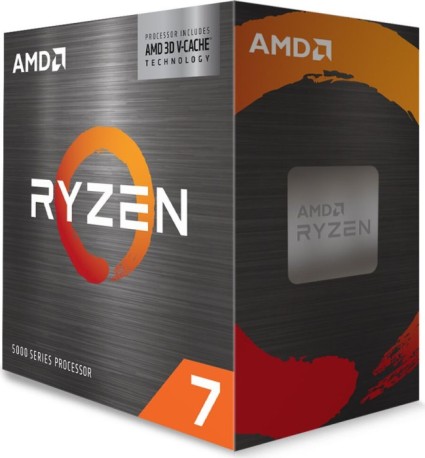
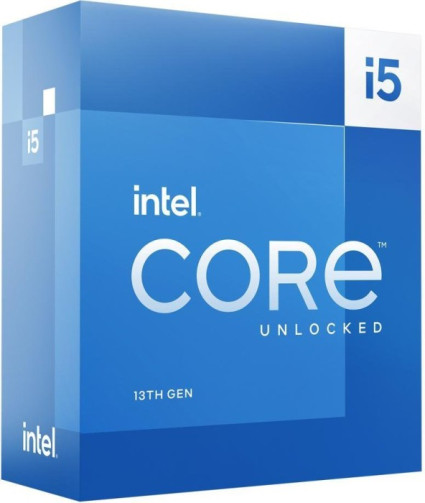
AMD Ryzen 7 5800X3D vs. Intel Core i5-13600K
In diesem Vergleich von AMD Ryzen 7 5800X3D versus Intel Core i5-13600K vergleichen wir die technischen Daten der beiden CPUs. Welcher Prozessor ist schneller? Hier gibt es FPS & Benchmarks in Gaming und Anwendungen.
Hinweis: Unsere Links sind Affiliate Links. Wir erhalten beim Kauf eine kleine Provision, ohne dass sich euer Preis erhöht.
 Die Produktdaten, Händler- und Angebotsdaten werden freundlicherweise von Geizhals.de bereitgestellt.
Allgemeine Informationen
| Günstigster Preis | ||
| Serie | Ryzen 5000 | Intel Core i-13000 |
| Chip-Architektur | Zen 3 | Raptor Cove (P-Core) + Gracemont (E-Core) |
| Codename | Vermeer | Raptor Lake-S |
| Produktname | AMD Ryzen 7 5800X3D | Intel Core i5-13600K |

Spezifikationen
Die Anzahl der Rechenkerne, die maximale Taktrate und die Größe des Cache können sich auf die Leistung in Spielen und Anwendungen auswirken. Mit 8 Kernen bietet der AMD Ryzen 7 5800X3D deutlich weniger Kerne als der Intel Core i5-13600K mit 14 Rechenkernen. Der maximale Takt liegt beim AMD Ryzen 7 5800X3D mit 4.50 GHz niedriger als beim Intel Core i5-13600K mit 5.10 GHz.
| Kerne (Gesamt) | 8 | 14 |
| Threads | 16 | 20 (12+8) |
| Anzahl P-Cores | 8C | 6C |
| Anzahl E-Cores | - | 8c |
| Basis-Takt | 3.40 GHz | 3.50 GHz |
| Takt P-Cores | 3.40 GHz | 3.50 GHz |
| Takt E-Cores | - | 2.60 GHz |
| Turbo-Takt | 4.50 GHz | 5.10 GHz |
| Turbo P-Cores | 4.50 GHz | 5.10 GHz |
| Turbo E-Cores | - | 3.90 GHz |
| Gesamter L2-Cache | 4 MB | 20MiB MB |
| Gesamter L3-Cache | 96 MB | 24MiB MB |
| Fertigung | TSMC 7 nm (CPU), GF 12 nm (I/O) | Intel 7 (10 nm) |
| Rechenleistung | - | - |
| Leistungsaufnahme (TDP) | 105W | 125W (Processor Base Power) 181W (Maximum Turbo Power) |
Mainboard-Kompatibilität
Während der AMD Ryzen 7 5800X3D den AMD AM4 Sockel nutzt, ist der Intel Core i5-13600K mit Mainboards für den Sockel Intel 1700 kompatibel. Die genaue Chipsatz-Eignung und die unterstützten PCIe-Lanes können Sie der Tabelle entnehmen.
| Sockel | AMD AM4 | Intel 1700 |
| Chipsatz-Eignung | A520, B550, X570 (modellabhängig: A320, B350, B450, X370, X470) | B660, B760, H610, H610E, H670, H770, Q670, Q670E, R680E, Z690, Z790, W680 |
| PCIe-3.0-Lanes | - | - |
| PCIe-4.0-Lanes | 24x | 4x |
| PCIe-5.0-Lanes | - | 16x |
RAM-Kompatibilität
Während Sie beim AMD Ryzen 7 5800X3D bis zu 128 GB vom Typ DDR4 im Dual Channel verbauen können, unterstützt der Intel Core i5-13600K bis zu 192 GB DDR4/DDR5 Arbeitsspeicher.
| Speicher-Controller | DDR4 | DDR4/DDR5 |
| Anzahl Speicherkanäle | Dual Channel | Dual Channel |
| max. Speichermenge | 128 GB | 192 GB |
| ECC-Unterstützung | ✓ | ✓ |
Grafik
| iGPU | - | ✓ |
| iGPU-Modell | - | Intel UHD Graphics 770 |
| iGPU-Takt | - | 0,30-1,50GHz |
| iGPU-Einheiten | - | 2Xe/32EU/256SP |
| iGPU-Rechenleistung | - | 0.77 TFLOPS (FP32) |
| iGPU-Architektur | - | Xe-LP / Gen 12.2 |
| iGPU-Interface | - | DP 1.4a (7680x4320@60Hz), eDP 1.4b (5120x3200@120Hz), HDMI 2.1 (4096x2160@60Hz) |
| iGPU-Funktionen | - | 4x Display Support, 2x Codec Engines / Video Decode Boxes, Intel Clear Video HD, Intel Quick Sync Video, AV1 decode, H.265 encode/decode, VP9 encode/decode, HDCP 2.3, DirectX 12, OpenGL 4.5, OpenCL 3.0, Vulkan 1.0 |
Sonstiges
| Freier Multiplikator | - | ✓ |
| Stepping | VMR-B2 | B0, Spec Code: SRMBD |
| Heatspreader-Kontaktmittel | Metall/verlötet | Metall/verlötet |
| Temparatur max. | 90°C (Tjmax) | 100°C (Tjunction) |
| Fernwartung | - | ✓ (Intel vPro, Intel vPro Essentials, Intel vPro Enterprise) |
| Einführung | 2022/Q2 (20.4.2022) | 2022/Q4 (20.10.2022) |
| Herstellergarantie | 3 Jahre bei AMD® Boxed-Prozessoren (Info EN) | 5 Jahre bei Intel® Boxed-Prozessoren durch erweiterte Garantieunterstützung (Info EN) |
CPU-Funktionen
| AES-NI | ✓ | ✓ |
| AVX | ✓ | ✓ |
| AVX2 | ✓ | ✓ |
| Boot Guard | - | ✓ |
| CET | - | ✓ |
| DL Boost | - | ✓ |
| EIST | - | ✓ |
| GNA 3.0 | - | ✓ |
| Idle States | - | ✓ |
| Instruction Set | - | ✓ |
| ISM | - | ✓ |
| MBEC | - | ✓ |
| Optane Memory Support | - | - |
| OS Guard | - | ✓ |
| Secure Key | - | ✓ |
| Speed Shift | - | ✓ |
| SSE4.1 | ✓ | ✓ |
| SSE4.2 | ✓ | ✓ |
| Thermal Monitoring | - | ✓ |
| VMD | - | ✓ |
| VT-d | - | ✓ |
| VT-x | - | ✓ |
| VT-x EPT | - | ✓ |
| XD Bit | - | ✓ |
Spiele

- AMD Ryzen 7 5800X3DAVG100.00 %1%100.00 %
- Intel Core i5-13600KAVG96.69 %1%102.04 %

- Intel Core i5-13600KAVG253.4 FPS1%184.8 FPS
- AMD Ryzen 7 5800X3DAVG268.3 FPS1%191.4 FPS

- Intel Core i5-13600KAVG593.6 FPS1%300.2 FPS
- AMD Ryzen 7 5800X3DAVG674.8 FPS1%350 FPS

- Intel Core i5-13600KAVG152.3 FPS1%106.4 FPS
- AMD Ryzen 7 5800X3DAVG182.1 FPS1%111.8 FPS

- Intel Core i5-13600KAVG196.1 FPS1%152.4 FPS
- AMD Ryzen 7 5800X3DAVG233.9 FPS1%175.8 FPS

- Intel Core i5-13600KAVG160.8 FPS1%109.2 FPS
- AMD Ryzen 7 5800X3DAVG143.9 FPS1%95.1 FPS

- Intel Core i5-13600KAVG239 FPS1%152.2 FPS
- AMD Ryzen 7 5800X3DAVG320.8 FPS1%175 FPS

- Intel Core i5-13600KAVG86.1 FPS1%65.7 FPS
- AMD Ryzen 7 5800X3DAVG72.1 FPS1%51.4 FPS

- Intel Core i5-13600KAVG278 FPS1%161.2 FPS
- AMD Ryzen 7 5800X3DAVG235.7 FPS1%131.6 FPS

- AMD Ryzen 7 5800X3DAVG0.61 FPSIntel Core i5-13600KAVG0.56 FPS

- AMD Ryzen 7 5800X3DAVG4.01 FPSIntel Core i5-13600KAVG2.64 FPS
Produktivität
- AMD Ryzen 7 5800X3DAVG100.00 %Intel Core i5-13600KAVG122.86 %

- AMD Ryzen 7 5800X3DPKT105274 PunkteIntel Core i5-13600KPKT122059 Punkte

- AMD Ryzen 7 5800X3DPKT1176 PunkteIntel Core i5-13600KPKT1397 Punkte

- AMD Ryzen 7 5800X3DPKT768 PunkteIntel Core i5-13600KPKT894 Punkte

- AMD Ryzen 7 5800X3DSEK371 SekundenIntel Core i5-13600KSEK275 Sekunden

- AMD Ryzen 7 5800X3DPKT878 PunkteIntel Core i5-13600KPKT1218 Punkte

- AMD Ryzen 7 5800X3DPKT2630 PunkteIntel Core i5-13600KPKT2960 Punkte

- AMD Ryzen 7 5800X3DPKT11687 PunkteIntel Core i5-13600KPKT16587 Punkte

- AMD Ryzen 7 5800X3DSEK88 SekundenIntel Core i5-13600KSEK67 Sekunden