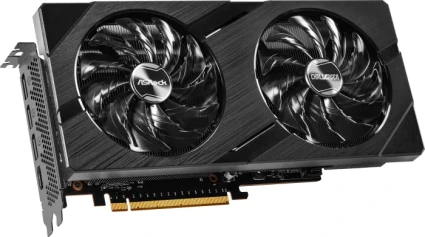
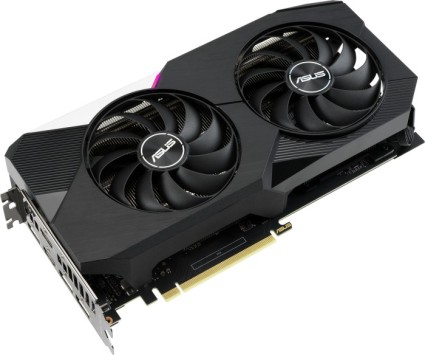
ASRock Arc A770 Challenger 16GB OC vs. ASUS Dual RTX 3060 Ti OC V2 (LHR)
In diesem Vergleich von ASRock Arc A770 Challenger 16GB OC versus ASUS Dual RTX 3060 Ti OC V2 (LHR) vergleichen wir die technischen Daten der beiden GPUs. Welche Grafikkarte ist schneller? Hier gibt es FPS & Benchmarks in Gaming und Anwendungen. Außerdem Daten zu Verbrauch, Effizienz (FPS pro Watt) und Preis-Leistung (FPS pro Euro).
Hinweis: Unsere Links sind Affiliate Links. Wir erhalten beim Kauf eine kleine Provision, ohne dass sich euer Preis erhöht.
 Die Produktdaten, Händler- und Angebotsdaten werden freundlicherweise von Geizhals.de bereitgestellt.
Allgemeine Informationen
| Günstigster Preis | ||
| Hersteller | ASRock | ASUS |
| Serie | Intel Arc A770 Graphics - 16GB | NVIDIA GeForce RTX 3060 Ti - 8GB |
| Chip-Architektur | Xe-HPG "Alchemist" (ab 2022/Q1) | Ampere (ab 2020/Q3) |
| Chip-Bezeichnung | ACM-G10 / DG2-512 | GA104-202-A1 |
| Fertigung | TSMC 6 nm | Samsung 8 nm |
| Chip-Größe | 406mm² mm² | 392mm² mm² |
| Kühlung | 2x Axial-Lüfter (100mm) mit 0dB-Zero-Fan-Modus | 2x Axial-Lüfter (100mm) mit 0dB-Zero-Fan-Modus (bis 55°C) |
Spezifikationen
Die Anzahl der Recheneinheiten, die Taktraten sowie die Größe des Cache sind neben der zugrunde liegenden Architektur ein Indiz für die Leistungsfähigkeit eines Produkts.
| Basis-Takt | unbekannt GHz | 1410 GHz |
| Boost-Takt | unbekannt GHz | 1710 GHz |
| Chip-Konfiguration | 32Xe / 512EU (4096SP / 256TMU / 128ROP) | 38SM (4864 ALUs / 152 TMUs / 80 ROPs) |
| Rechenleistung | N/A (FP16), N/A (FP32), N/A (FP64) | 16.93 TFLOPS (FP16), 16.93 TFLOPS (FP32), 0.26 TFLOPS (FP64) |
Kompatibilität und Abmessungen
| Schnittstelle | PCIe 4.0 x16 | PCIe 4.0 x16 |
| Abmessung | 271 | 269 |
| Gesamthöhe | Triple Slot (2.4 Slots) | Triple Slot (2.7 Slots) |
| Bauform | PCIe-Karte (full height) | PCIe-Karte (full height) |
| Slotblende | full height | full height |
| Leistungsaufnahme (TDP) | 225W (Intel) | 200W |
| Zusätzliche Stromanschlüsse | 2x 8-Pin PCIe | 1x 8-Pin PCIe |
Speicher
Die ASRock Arc A770 Challenger 16GB OC verfügt über 16 GB GDDR6 Videospeicher, welcher an ein 256 Bit Speicherinterface angebunden ist und mit 16 Gbps taktet. Die Speicherbandbreite liegt damit bei 512 GB/s. Bei der ASUS Dual RTX 3060 Ti OC V2 (LHR) sind dagegen 8 GB GDDR6 VRAM mit einer Taktrate von 14 Gbps an einem 256 Bit Speicherinterface angeschlossen. Daraus resultiert eine Speicherbandbreite von 448 GB/s.
| Speicherkapazität | 16 GB | 8 GB |
| Speichertyp | GDDR6 | GDDR6 |
| Speicherinterface | 256 Bit | 256 Bit |
| Speichertakt | 16 Gbps (2000 MHz) | 14 Gbps (1750 MHz) |
| Speicherbandbreite | 512 GB/s | 448 GB/s |
Videoanschlüsse
| HDMI | 1x HDMI 2.1 | 2x HDMI 2.1 |
| DisplayPort | 3x DisplayPort 2.0 UHBR10 | 3x DisplayPort 1.4a |
Transcoding-Engine
| NVENC | - | 1x (7th Gen, max. Sessions: 5) |
| NVDEC | - | 1x (5th Gen) |
Encoding
| H.265 | ✓ (4K YUV 4:2:0 / 4K YUV 4:4:4 / HEVC 10bit support) | ✓ (4K YUV 4:2:0 / 4K YUV 4:4:4 / 4K Lossless / 8K / HEVC 10bit support / HEVC B Frame support) |
| H.264 | ✓ (YUV 4:2:0 / YUV 4:4:4) | ✓ (YUV 4:2:0 / YUV 4:4:4 / Lossless) |
Decoding
| AV1 | ✓ (8bit / 10bit) | ✓ (8bit / 10bit) |
| H.265 | ✓ (8bit 4:2:0 / 10bit 4:2:0 / 12bit 4:2:0 / 8bit 4:4:4 / 10bit 4:4:4 / 12bit 4:4:4) | ✓ (8bit 4:2:0 / 10bit 4:2:0 / 12bit 4:2:0 / 8bit 4:4:4 / 10bit 4:4:4 / 12bit 4:4:4) |
| H.264 | ✓ | ✓ |
| VP9 | ✓ (8bit / 10bit / 12bit) | ✓ (8bit / 10bit / 12bit) |
| VP8 | ✓ | ✓ |
| VP8 | ✓ | ✓ |
| VP8 | - | ✓ |
| VP8 | ✓ | ✓ |
API-Unterstützung
| DirectX | 12 Ultimate (12_2) | 12 Ultimate (12_2) |
| CUDA | - | 8.6 |
| Vulkan | 1.3 | 1.3 |
| OpenCL | 3.0 | 3.0 |
| OpenGL | 4.6 | 4.6 |
| Shader Modell | 6.6 | 6.7 |
| Multi-GPU-Unterstützung | - | - |
Chip-Unterstützungen
| Raytracing | ✓ | ✓ (2nd Gen NVIDIA RTX) |
| NVIDIA Tensor | - | ✓ (3rd Gen) |
| HDCP | - | 2.3 |
Sonstiges
| Herstellergarantie | zwei Jahre (Abwicklung über Händler) | drei Jahre (Abwicklung über Händler) |
Spiele

- NVIDIA GeForce RTX 3060 Ti - 8GBAVG134.55 %1%142.28 %
- Intel Arc A770 Graphics - 16GBAVG100.00 %1%100.00 %

- NVIDIA GeForce RTX 3060 Ti - 8GBAVG38 FPS1%28.2 FPS
- Intel Arc A770 Graphics - 16GBAVG31.3 FPS1%24.8 FPS

- NVIDIA GeForce RTX 3060 Ti - 8GBAVG96 FPS1%55.7 FPS
- Intel Arc A770 Graphics - 16GBAVG77.6 FPS1%50.3 FPS

- NVIDIA GeForce RTX 3060 Ti - 8GBAVG413.9 FPS1%265.6 FPS
- Intel Arc A770 Graphics - 16GBAVG242.3 FPS1%142.4 FPS

- NVIDIA GeForce RTX 3060 Ti - 8GBAVG64.7 FPS1%54.2 FPS
- Intel Arc A770 Graphics - 16GBAVG64 FPS1%53.7 FPS

- NVIDIA GeForce RTX 3060 Ti - 8GBAVG133.2 FPS1%115.4 FPS
- Intel Arc A770 Graphics - 16GBAVG84.3 FPS1%76.8 FPS

- NVIDIA GeForce RTX 3060 Ti - 8GBAVG132.6 FPS1%108.4 FPS
- Intel Arc A770 Graphics - 16GBAVG100.4 FPS1%47.5 FPS

- NVIDIA GeForce RTX 3060 Ti - 8GBAVG102 FPS1%69.1 FPS
- Intel Arc A770 Graphics - 16GBAVG82.5 FPS1%54.7 FPS

- NVIDIA GeForce RTX 3060 Ti - 8GBAVG127.5 FPS1%102.7 FPS
- Intel Arc A770 Graphics - 16GBAVG100.9 FPS1%84.8 FPS

- NVIDIA GeForce RTX 3060 Ti - 8GBAVG51.4 FPS1%32.7 FPS
- Intel Arc A770 Graphics - 16GBAVG49.4 FPS1%32.9 FPS

- NVIDIA GeForce RTX 3060 Ti - 8GBAVG154.6 FPS1%110.1 FPS
- Intel Arc A770 Graphics - 16GBAVG116.6 FPS1%80.7 FPS

- NVIDIA GeForce RTX 3060 Ti - 8GBAVG59.8 FPS1%42.4 FPS
- Intel Arc A770 Graphics - 16GBAVG29.9 FPS1%19.7 FPS

- NVIDIA GeForce RTX 3060 Ti - 8GBAVG99.3 FPS1%78.3 FPS
- Intel Arc A770 Graphics - 16GBAVG82.2 FPS1%66.1 FPS

- NVIDIA GeForce RTX 3060 Ti - 8GBAVG0.32 FPSIntel Arc A770 Graphics - 16GBAVG0.29 FPS